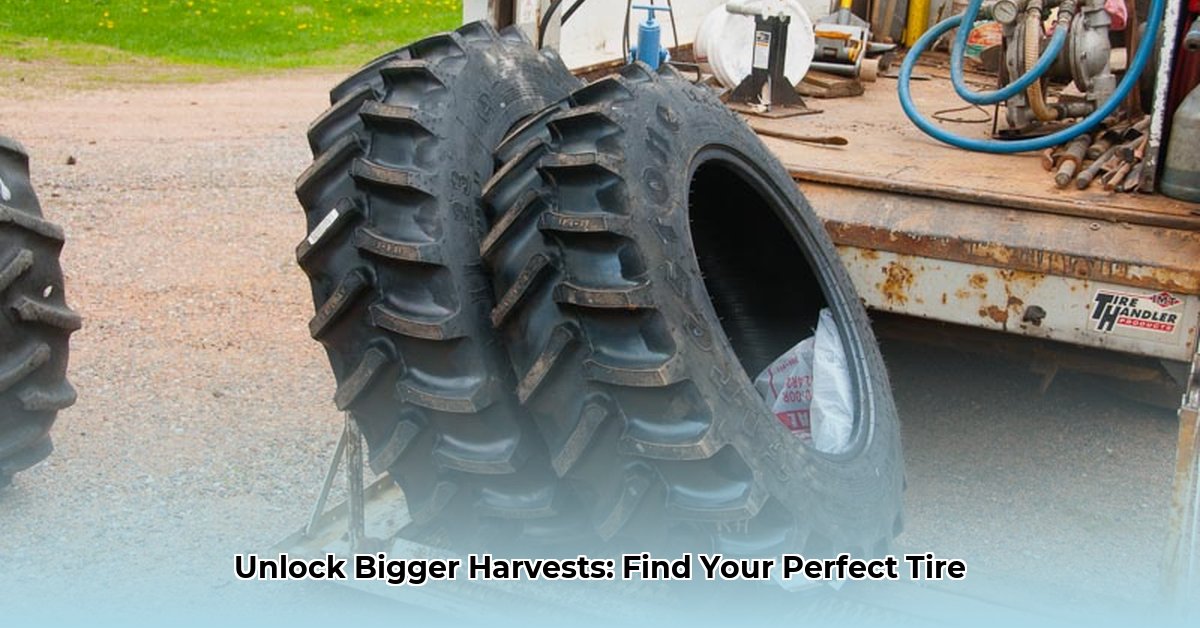
Choosing the right large tractor tires is crucial for maximizing farm efficiency and yield. This comprehensive guide provides actionable steps for farmers and online retailers, focusing on sustainable practices and informed decision-making. For more information on specific tire sizes, check out this helpful resource on 12.4x38 tractor tires.
Large Tractor Tire Selection: A Farmer's Guide to Maximizing Yields
Selecting the appropriate large tractor tires significantly impacts farm productivity and profitability. This section outlines key factors to consider for optimal tire selection. Do you understand the crucial interplay between tire selection and your farm's specific needs?
Understanding Your Needs: The Perfect Tire for Your Farm
Before purchasing, assess your farm's specific needs. Ignoring these factors can lead to inefficient operation and increased costs.
1. Load Capacity: Determine the maximum weight your tractor will regularly carry (tractor, implements, harvested crops). Insufficient load capacity leads to premature wear and potential tire failure.
2. Soil Type: Different soil types require different tread patterns. Deep lugs provide superior grip in soft, muddy conditions while shallower treads minimize compaction on hard-packed soils. Consider the soil variation across your fields.
3. Intended Use: The tire's intended use (fieldwork, highway travel) dictates the optimal tread pattern and construction. Fieldwork demands aggressive treads for traction, while highway use prioritizes longevity and even wear.
4. Tire Size: Always consult your tractor's manual for recommended tire sizes to maintain optimal performance and safety. Incorrect sizing negatively impacts handling and efficiency.
Navigating the Online Marketplace: Smart Shopping for Big Tires
Online purchasing offers convenience but requires careful navigation. This section provides a step-by-step approach to finding reliable online retailers and making informed choices. How confident are you in your ability to identify reputable online retailers selling agricultural tires?
A Step-by-Step Guide to Smart Online Purchasing
Step 1: Conduct Thorough Research: Compare prices and specifications from multiple reputable online retailers, not just settling for the first deal.
Step 2: Meticulously Verify Product Information: Scrutinize specifications, ensuring they match your requirements. Check for detailed descriptions, high-quality images, and any certifications.
Step 3: Analyze Customer Reviews: Read reviews focusing on shipping and delivery experiences, as well as aspects of customer service. Look for consistent patterns of praise or complaints.
Step 4: Understand Shipping & Logistics: Obtain clear upfront quotes including all fees (taxes, handling). Factor in potential delays into your farm operations. Consider expedited shipping if necessary.
Tire Maintenance: Maximizing Your Investment
Proper tire care significantly impacts longevity and performance. Regular maintenance is key to extending tire lifespan and optimizing farm operations. What preventative maintenance measures are you incorporating into your farm's routine?
Extending Tire Lifespan Through Effective Maintenance
Regular Pressure Checks: Maintain correct inflation pressure (consult your tractor's manual). Underinflation increases wear and fuel consumption, while overinflation causes damage.
Tire Rotation: Rotate tires regularly according to the manufacturer's recommendations for even wear. This simple step drastically extends tire longevity.
Proper Storage: Store unused tires in a cool, dry location, away from direct sunlight and harsh weather, using wheel covers if possible.
Sustainable Practices: Environmentally Conscious Choices
Sustainable farming involves responsible tire management, encompassing both purchasing and disposal. What steps are you taking toward incorporating environmentally friendly practices into your tire management system?
Minimizing Environmental Impact Through Sustainable Tire Management
Eco-Friendly Tires: Explore environmentally conscious options: tires made from recycled or bio-based materials, or those with lower carbon footprints during manufacturing.
Recycling Programs: Research tire recycling options in your area. Many manufacturers have established recycling programs to minimize environmental impact.
A Quick Comparison: Online vs. Brick-and-Mortar Retailers
| Feature | Online Retail | Traditional Retail |
|---|---|---|
| Convenience | High (Shop anytime, anywhere) | Moderate (Store hours, travel time) |
| Price | Potentially lower (reduced overhead) | Potentially higher (includes store overhead) |
| Product Info | Varies; check for detail and clarity | Usually detailed, with in-person assistance |
| Shipping Costs | Significant for large tires | May be lower or included for local purchases |
| Customer Service | Varies; check for responsiveness | Often more readily available in-person |
Looking to the Future: Innovations in Large Tractor Tire Technology
Ongoing research focuses on creating more durable, fuel-efficient, and eco-friendly tires. Future advancements in materials science and tire design will lead to enhanced longevity and reduced environmental impact.
How to Choose Sustainable Farm Tires for Optimal Lifespan and Reduced Environmental Impact
Farmers are increasingly aware of the environmental impact of their operations, leading to a growing demand for sustainable solutions. This section provides a step-by-step guide and addresses key sustainability concerns. How can you ensure your tire choices align with your commitment to sustainable farming practices?
Key Considerations for Sustainable Tire Selection
- Soil compaction: Consider tires designed to minimize soil disturbance and improve traction.
- Fuel efficiency: Lower rolling resistance contributes to fuel savings and reduced emissions.
- Tire longevity: Sustainable tires often boast increased durability, extending their lifespan and reducing waste.
A Step-by-Step Guide
Step 1: Assess your needs (soil type, load capacity, intended use, climate). Step 2: Research sustainable tire options (recycled/bio-based materials, eco-certifications). Step 3: Find reputable online or local retailers. Step 4: Prioritize tire maintenance (regular checks, proper inflation, rotation). Step 5: Plan for responsible disposal utilizing local recycling programs.
Broadening the Scope of Sustainability
Beyond tire selection, consider: * Reducing transportation emissions by sourcing tires locally. * Supporting manufacturers committed to ethical and environmental responsibility. * Exploring government incentives for sustainable farming practices.
Challenges and Future Directions
While sustainable tires offer significant benefits, challenges remain including higher initial costs and the need for further research to validate long-term performance and durability across diverse conditions. Increased production of sustainable materials and enhanced recycling infrastructure are crucial for wider adoption.